
Bing's homepage today shows a cluster of red-leaf azalea leaves dusted with frost. The crystals cling to the edges and surfaces like fine salt, turning an ordinary shrub into a close-up winter landscape.
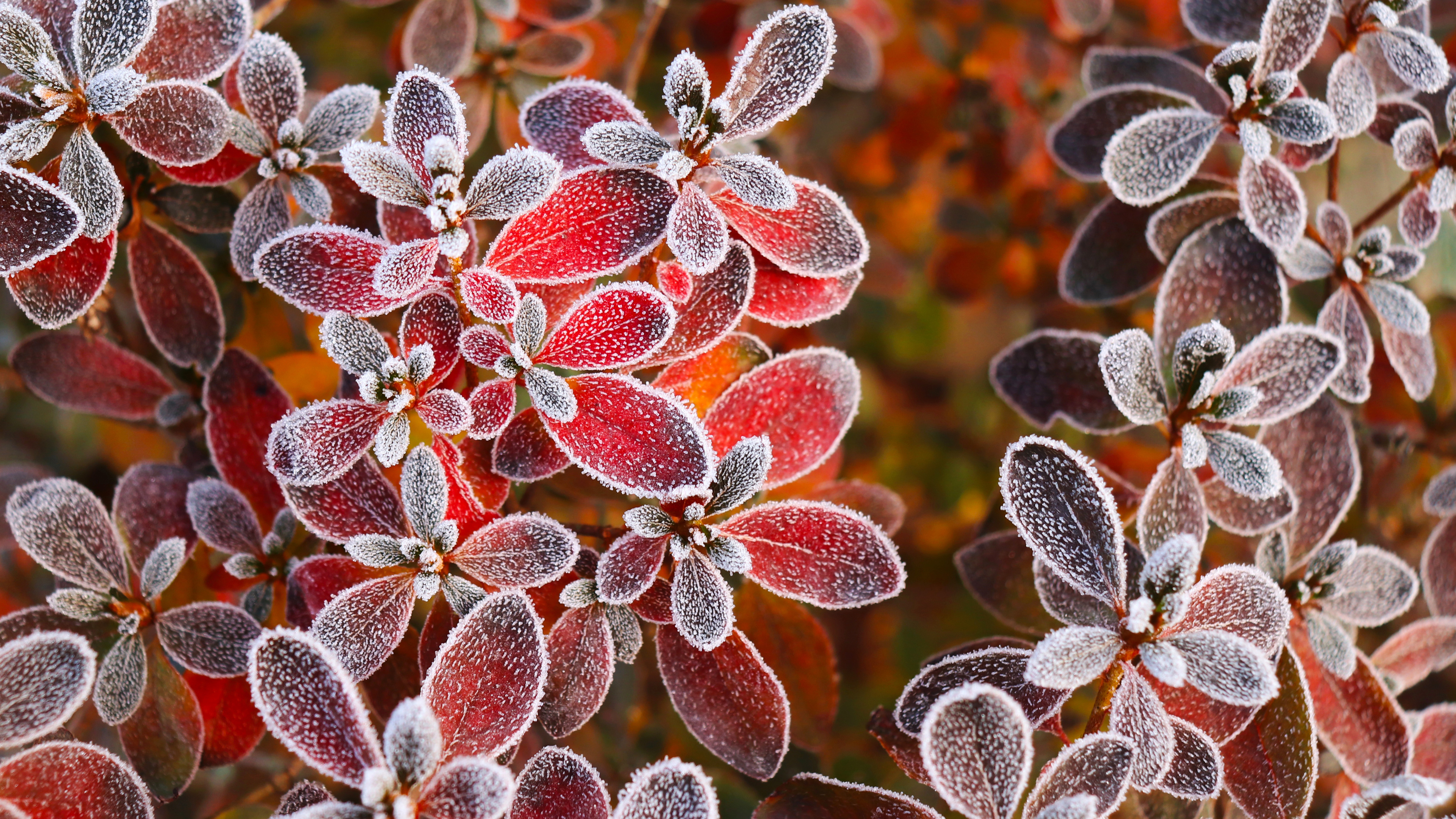
Image: Bing daily wallpaper · Frost-covered red-leaf azalea (© avoferten/Shutterstock) · Original page
Azaleas belong to the genus Rhododendron. Many garden azaleas are evergreen or semi-evergreen, so cold weather puts the water inside their leaves and their cell membranes at risk of freezing. Plants cannot hold a constant body temperature the way animals do. They can, however, adjust their tissues by reducing readily-freezable water and accumulating dissolved sugars. Species and cultivars differ widely in hardiness, so one frost is both a weather event and a physiological test.
The white in this photograph is not the leaf turning white. It is light scattered by frost crystals. At night, the ground and nearby surfaces radiate heat toward the sky. Under clear, calm conditions, a leaf can cool faster than the air around it. Once its surface falls below the local dew point, water vapor condenses; below freezing, it forms ice crystals. As the morning sun warms the leaf, the crystals melt and the white coating disappears.
On the next clear, cold morning, look at an evergreen shrub near you. Along with the temperature forecast, notice whether the sky is clear and the air is still, and check grass or car roofs for frost. A hand lens can reveal that the crystals are not evenly shaped or distributed: leaf temperature, surface texture, and airflow all leave their mark.