
A scanning line crosses a nebula from left to right, accompanied by rising and falling sounds. The dark shapes that look like stone towers can be followed by ear. Today's APOD invites us to listen to the Eagle Nebula's Pillars of Creation.
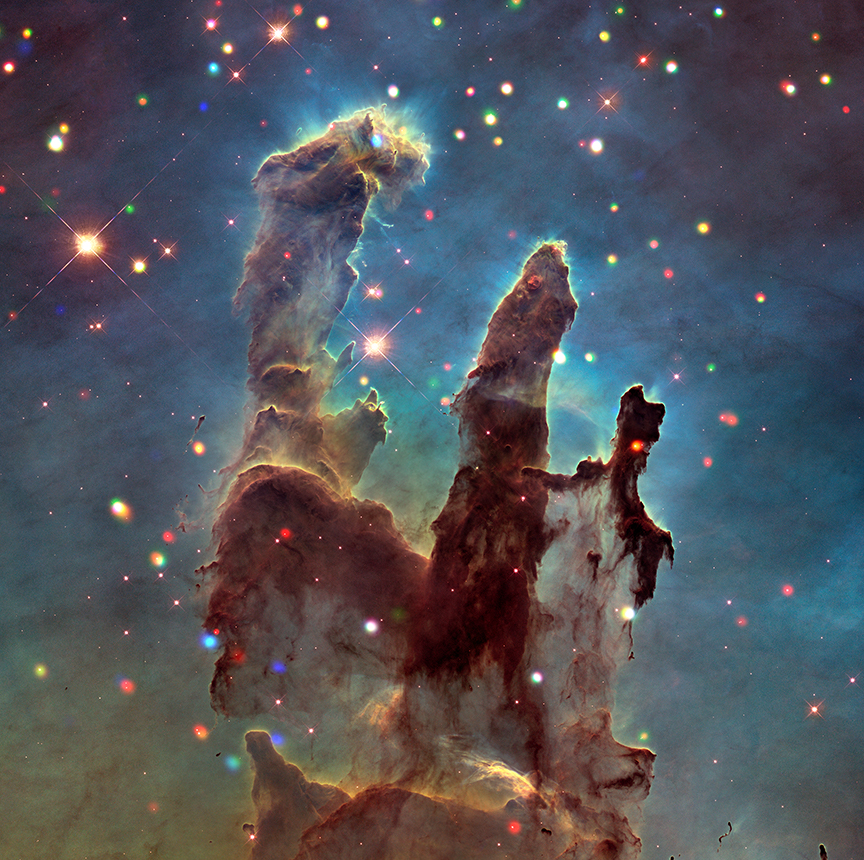
Image: X-ray: NASA/CXC/SAO; Optical: NASA/STScI. Sonification: NASA/CXC/SAO/K. Arcand, SYSTEM Sounds (M. Russo, A. Santaguida). APOD image credit: NASA, ESA, & The Hubble Heritage Project (STScI/AURA). Original page.
Start with the complete video with sound. This is a sonification of telescope image data: a set of chosen rules turns visible structures into audible ones. The audio was created from data rather than recorded by a microphone at the nebula.
How an ear reads an image
The Chandra sonification project explains the mapping. The scan moves from left to right, while a light source's vertical position controls its pitch. Higher in the picture means higher in pitch. The pillars' contours become continuous sweeps, like tracing a rising and falling ridgeline with a finger. Pitch describes image position here; it does not tell us how far away a star lies.
The project's technical description also explains the sound's texture. Compact sources produce short, pure tones. Extended structures such as the pillars contain many frequencies and produce noisy, roaring sounds. An ear can begin to distinguish points from broader patches.
The optical and X-ray data can be heard separately or together. Different wavelengths reveal different structures in the same part of the sky; listening to each layer helps distinguish its contribution. The work was led by the Chandra X-ray Center, driven by Kimberly Arcand, Matt Russo and Andrew Santaguida.
Towers that are changing
These pillars consist of cold gas and dust extending for light-years. Today's APOD places them about 6,500 light-years away, toward Serpens, within the Eagle Nebula, M16. Ultraviolet radiation and winds from massive stars in its cluster sculpt and erode the columns amid an environment of star formation.
Dense knots of gas and dust at the pillars' tips shield material below, keeping it cooler and helping the long columns persist. NASA's account of Hubble's observations shows distinct images taken in 1995 and 2014. The optical and X-ray composite and the sonification released in 2020 have their own data histories, too. The familiar subject has been observed and presented in several different ways.
Try listening twice. First watch the scanning line and follow the changes in pitch around the pillars. Then close your eyes and listen for the contours rising and falling. On the project page, switch between the optical and X-ray solos. Sound gives us another way to search for structure.