
Mountain ridges fold across the landscape like crumpled paper, with snow tracing the high ground and dark water near the center. Canadian astronaut Joshua Kutryk photographed Lake Pelku from the International Space Station. The lake lies north of the Himalayas and is also known as Paiku Co.
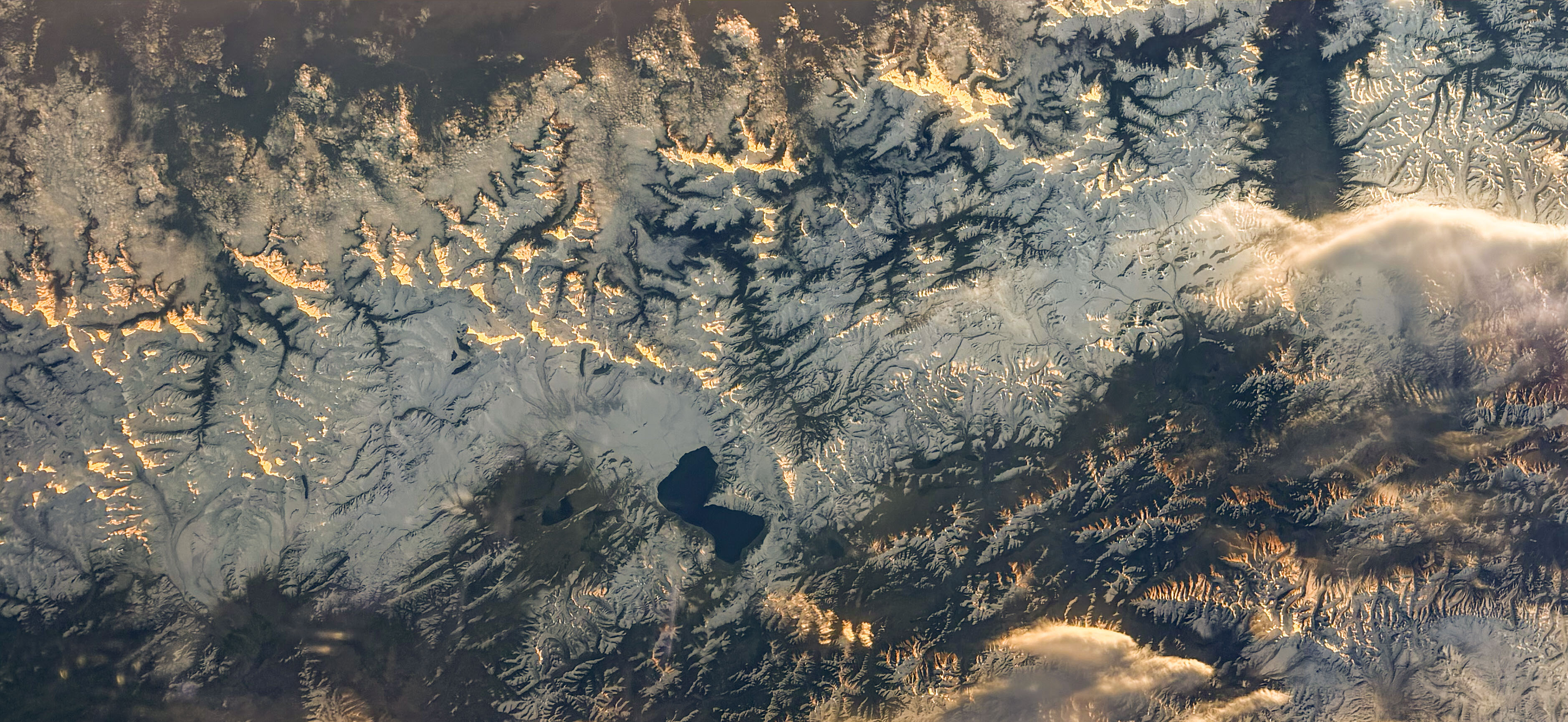
Image: CSA/Joshua Kutryk. Original page
NASA published this photograph on November 19; its image archive labels the capture date November 13. The frame gives us the lake and its mountainous surroundings together, while changes in water level require observations made over time.
More than a basin catching rain
An earlier NASA Earth Observatory account of Paiku describes a lake with an average depth of about 41 meters. That depth allows it to store considerable heat. A large volume of water does not warm and cool as quickly as the day's air.
The original study published in 2021 brought together water temperatures, lake levels, weather, and runoff observations to explain its seasonal rhythm. During the July-to-September monsoon, rain and meltwater supply the lake and its level rises, while the water also takes up heat. From October to December, incoming water diminishes, but the lake can continue releasing stored heat. Strong evaporation then contributes to falling water levels.
Think of a large pot of water after the heat has been turned down: it does not become cold at once. The lake's heat storage and release help determine when it returns water to the air. Winter ice brings another phase in that rhythm.
This photograph shows the spatial relationship between mountains and lake. The study's longer measurements reveal how the water behaves across seasons. Color alone cannot tell us the water's quality or depth.
For a small observation of your own, photograph a local lake repeatedly from the same safe spot as the weather cools. Use a fixed rock or embankment as a reference and record the date and waterline. Separating what something looks like today from what changes over time is a first step toward the kind of observation that makes a view from space scientifically useful.