
At first, this looks like a portrait of a space telescope with solar panels. Move closer and the spacecraft breaks into countless little pictures. NASA's November 6 Astronomy Picture of the Day says goodbye to the Neil Gehrels Swift Observatory with a mosaic made in 2018.
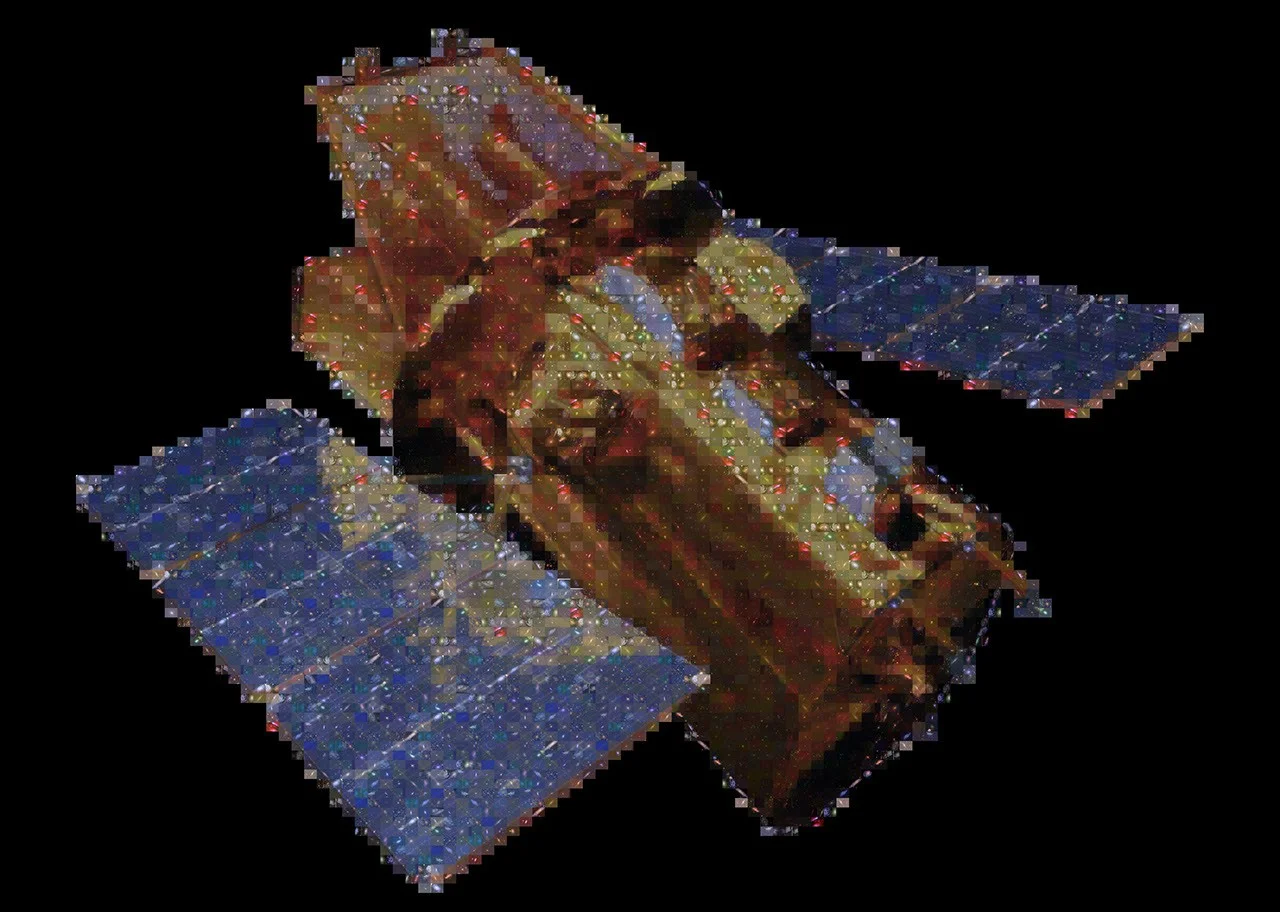
Image: NASA Astronomy Picture of the Day · Credit: NASA/Swift and AndreaMosaic · Original page
NASA's mission record confirms that Swift re-entered the atmosphere over the North Sumatra region of Indonesia at 7:39 a.m. Eastern Standard Time on November 4, 2026. Launched in 2004, it worked for nearly 22 years, far beyond its original two-year primary mission. The featured mosaic is not a photograph of that re-entry. It was made years earlier using some of the first million images from Swift's Ultraviolet/Optical Telescope.
Swift also carried X-ray and gamma-ray instruments. Together, they let astronomers follow sudden, energetic events in different kinds of light. Solar activity during the recent maximum sped up the satellite's orbital decline. A mission attempted to raise its orbit, but NASA's account of that effort says the boost did not succeed.
The spacecraft is gone; its observations remain. Looking at this portrait made from older data, you can ask when an instrument's work really ends: when it falls, or when people stop finding new questions to ask of its records.