
The path seems to end at a stone wall. Then you spot the wooden steps, rising on one side and continuing down the other. Beyond them, one ridge follows another into the distance. There is still somewhere to go.
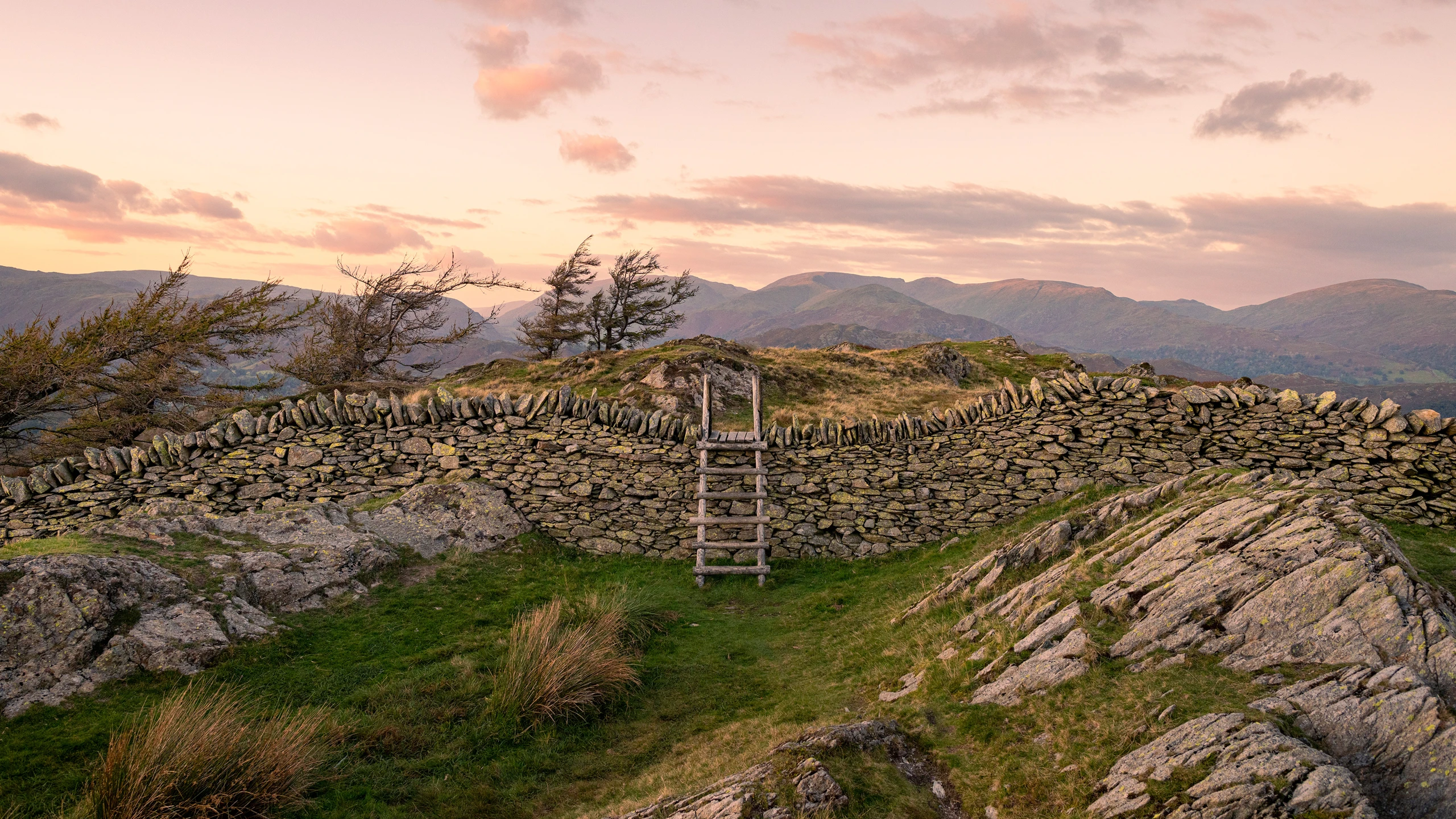
Image: Bing daily wallpaper · Credit: A wooden stile beside a stone wall, Black Crag, Lake District, England (© Alex Treadway/Getty Images) · Original page
Bing's November 5 photograph shows a stile in England's Lake District. The wall continues to divide the land while walkers use a crossing built for that purpose, without dismantling stones or finding their own footholds along the top.
A boundary with a way through
These hills are places where people farm, graze animals and live, as well as places people visit for the view. Where a wall meets a footpath, the landscape has to accommodate both the boundary and the people following the route.
A ladder, though, works best for someone who can climb it. A person using a wheelchair, pushing a stroller or coping with painful knees may be stopped altogether. The national park's guidance on gates and stiles emphasizes making access as little restrictive as possible. New stiles are rarely authorized, and replacement structures should not make an existing crossing harder to use.
That gives this small feature a bigger story. Designing a good path means considering who can get through, as well as whether a crossing exists. More people should have a chance to reach the view.
Before a Lake District walk, check the park's route and access information against the needs of everyone coming along. Closer to home, notice a step, narrow gap or heavy gate on a public path. Who would have to stop there?