
Twilight settles over Wroclaw, Poland. Red roofs overlap, and windows around the market square begin to glow. The unusual part of today's Bing photograph lies behind the camera: the photographer is standing on a bridge with no river beneath it.
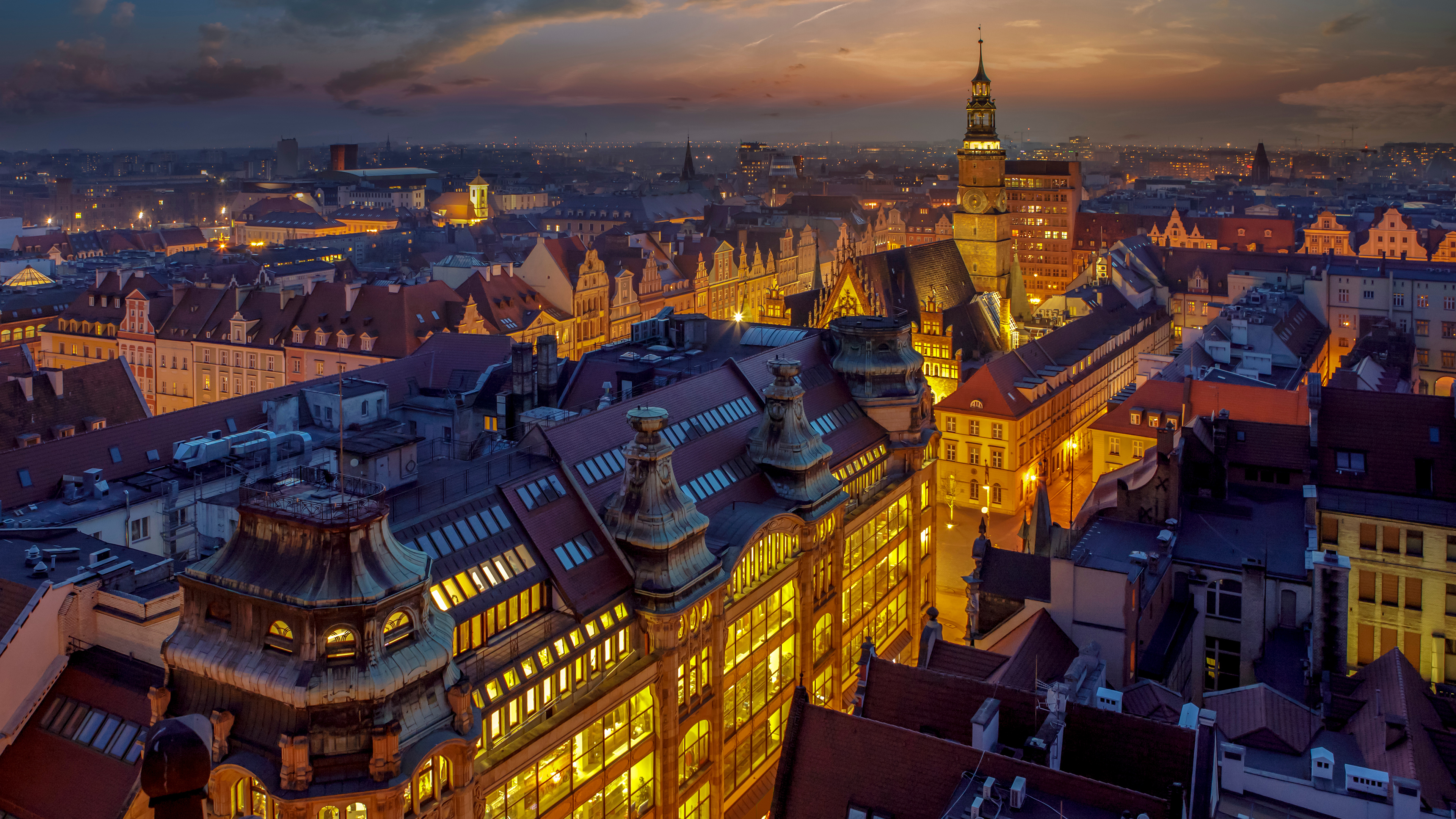
Image: Bing Wallpaper. View of Wroclaw market square from the Witches Bridge, Wroclaw, Poland (© Piotr Mitelski/Shutterstock). Original page.
A crossing between towers
Its Polish name is Mostek Pokutnic, the Bridge of the Penitents. It is also known as the Witches Bridge. According to the city's account, the narrow outdoor passage joins the two towers of St. Mary Magdalene's Church, about 45 meters above the ground. It connects one high tower to another, with the city below.
From here, visitors can see part of the market square, the Town Hall tower and St. Elizabeth's Church. Rooflines that block one another at street level fall away as you climb, allowing distant towers to emerge. A change in height redraws the map.
The Lower Silesian tourist organization describes the ascent through the north tower: 247 steps. There is no elevator. Before planning a photograph, consider the climb and how comfortable you feel at height.
A legend and a rebuilt crossing
In one story recorded by the city, a young woman named Tekla is cursed to sweep the bridge without end. A little witch, Martynka, takes pity on her and asks a wizard to lift the curse. The tale gives the exposed passage a human story; it is folklore rather than a record of its construction.
The building's history has its own reversals. The present Gothic church dates from the 14th century, and a passage between its towers existed by the turn of the 16th. Celebration fireworks set the north tower on fire in 1887. An explosion of stored ammunition damaged the south tower in 1945. The bridge visitors use today was rebuilt around the turn of the 21st century.
An old skyline can contain relatively new masonry. Sometimes what survives is a shape that another generation has carefully put back together.
Back at street level
A bridge between towers stands out in a city so closely tied to waterways. The city's bridge heritage route explains how branches of the Oder formed islands. Early crossings used shallow fords; bridges and walkways later connected banks and islands without requiring travelers to enter the water. Materials changed, but the need to cross remained.
Another scale of city history waits near the pavement, among Wroclaw's little dwarf statues. A National Museum workshop description connects these figures with the Orange Alternative opposition movement of the 1980s. Humorous imagery became a form of public memory that people can seek out on a walk.
Before climbing the bridge, choose a tower to identify from the ground. Find it again above the roofs and notice what was hiding it. Afterward, look down for the little figures. Check the city's viewpoint page for opening arrangements before visiting.