
One law, one desert and a great bird that returned from a population of 22.
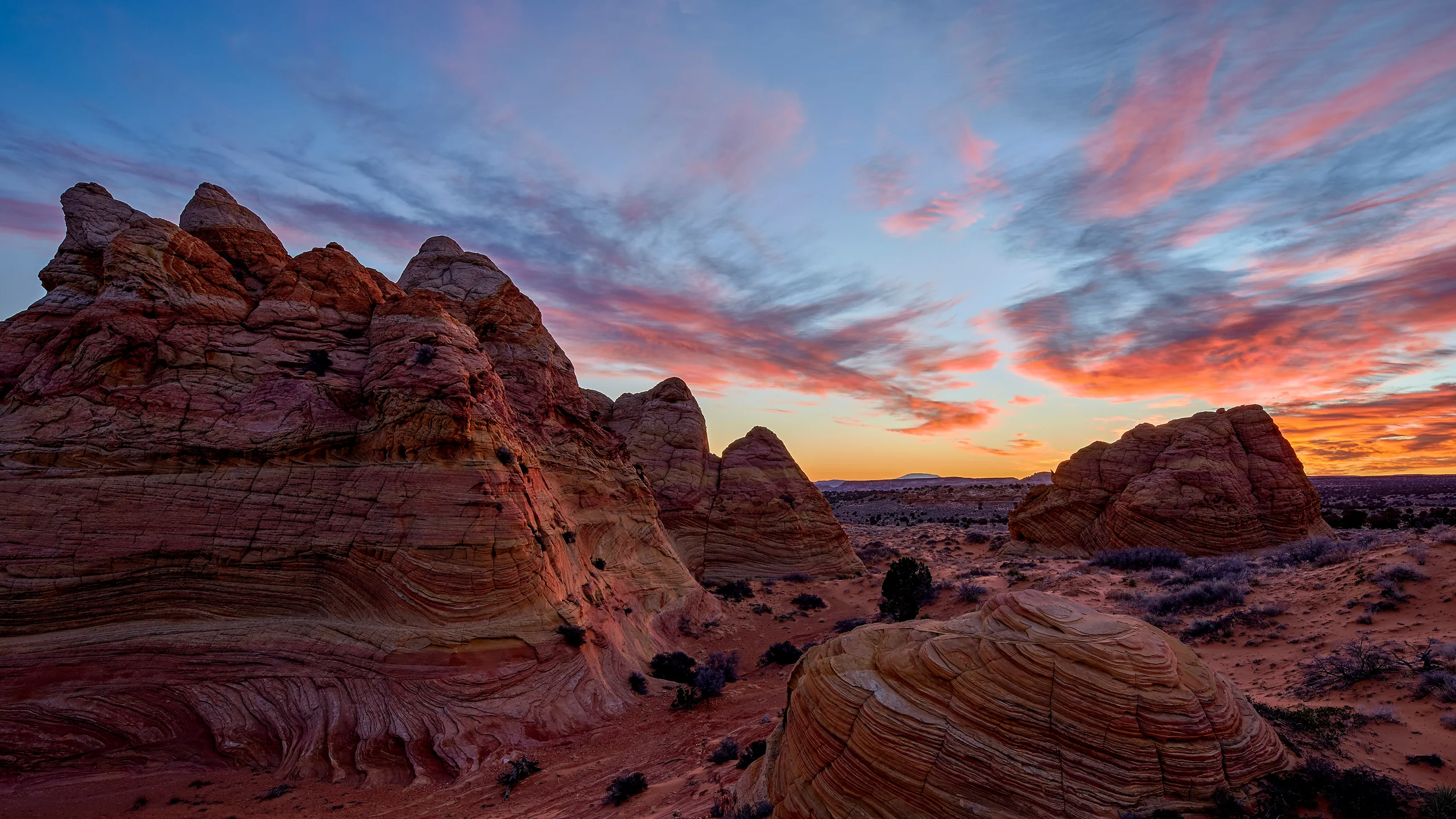
Image: Bing Daily Wallpaper | Coyote Buttes, Vermilion Cliffs National Monument, Arizona, USA (© James Hager/Getty Images) | View on Bing
Open Bing today and the screen fills with rock baked orange-red. There is no grass and no water. A few improbable stone columns balance slabs wider than themselves, like acrobats on tiptoe holding their breath. Farther back, walls of rock rise layer upon layer, their markings like waves frozen in place.
This is Coyote Buttes in Arizona's Vermilion Cliffs National Monument. Bing's title for today's image contains a clue: An Act to Protect the Wilderness. Sixty-two years ago today, on September 3, 1964, a U.S. president signed a piece of paper. That paper is why these rocks still look this way.
First, How Did This Rock Form?
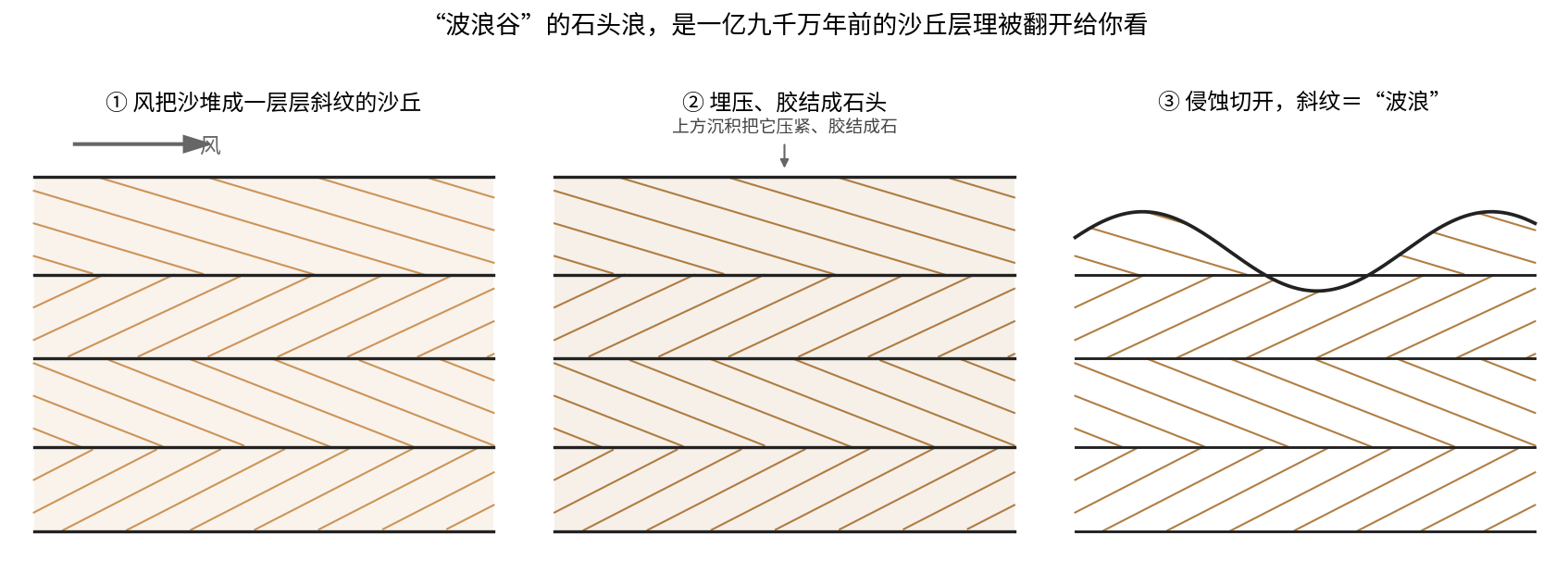
Those wave-like markings are a deception: they have nothing to do with water.
One hundred ninety million years ago, in the Early Jurassic when dinosaurs still lived, this was not the desert of today but a boundless field of sand dunes, like the modern Sahara, built scoop by scoop by the wind. The wind blew east one day and west the next, each gust spreading sand over a slightly different slope. Slanted layer settled upon slanted layer, piling ever higher.
The sand was later buried, compressed and cemented into rock. Geologists call these inclined, overlapping layers cross-bedding. Wind and rain then slowly cut into the rock's surface, like slicing into a mille-feuille. The "waves" we see are the interiors of ancient dunes, their own slanting layers exposed.
The strange result is this: the "stone wave" is a desert that died 190 million years ago, opened from the inside by time.
The columns balancing broad stones are the result of another slow-motion contest. The caprock is harder, so it acts like an umbrella, sheltering the softer rock below from wind and rain. The exposed stone around it wears away while the protected stone remains, leaving an ever-narrower pillar beneath a hat that still refuses to fall.
Why Today?
On September 3, 1964, President Lyndon B. Johnson signed the Wilderness Act, Public Law 88-577. Today is its 62nd birthday. By coincidence, September 3 fell on a Thursday in 1964, just as it does this year.
The law did something that sounded unusual at the time: by national statute, it designated certain land to remain wild forever and stay beyond development. No roads, no buildings, no motor vehicles. It established the world's first National Wilderness Preservation System.
The law was written by Howard Zahniser. Beginning in 1956, he spent eight years producing 66 drafts and pushing it toward passage. He did not live to see that happen. Zahniser died in May 1964; Congress passed the bill and the president signed it a few months later. For a wilderness he would never enter again, he completed the final word.
One line in the act has been quoted for 62 years. It defines wilderness as land where the earth and its community of life are "untrammeled by man," where humans are "visitors who do not remain."
One frequently misunderstood word deserves clarification. Zahniser wrote untrammeled, not untrampled. A trammel is a net or shackle. Untrammeled therefore means not caught, bound or restrained: the land governs itself, and wind, water, fire, life and death follow their own rules without human interference. Zahniser deliberately chose this difficult word and resisted colleagues who wanted something simpler. He was not asking for purity. He was asking for freedom.
The Best Reason Is a Bird
If this wilderness were only a collection of beautiful rocks, that would not be enough. Its real weight is carried by a bird.
The California condor has the largest wingspan of any land bird in North America, nearly three meters. During the last century, it almost disappeared from Earth. By 1982, only 22 remained in the world. Scientists made a difficult decision: in 1987, they captured the last wild condor for captive breeding. For several years, not one survived in the wild; the species consisted entirely of some two dozen birds in enclosures. Every California condor alive today descends from that small group.
In 1996, six condors were brought to the cliffs at Vermilion Cliffs and released into the sky. They were the first wild condors to fly over Arizona in nearly a century. By the end of 2025, the species had climbed from 22 birds to 607, including 392 in the wild. The flock around Vermilion Cliffs numbered 98. The danger is not over: lead poisoning, caused by eating carcasses containing fragments of lead ammunition, remains the leading killer, and an avian influenza outbreak killed 21 birds in the Arizona flock in 2023. Even so, the species has made its way from 22 to 607.
That is the Wilderness Act's strongest argument: we preserve wild land not simply to save scenery, but to leave a place where a life almost lost can return to the sky.
The Same Choice in China
China made the same choice to preserve wild land through law, and at almost the same point in history.
The United States signed the Wilderness Act in 1964. Eight years earlier, in 1956, China established its first nature reserve at Dinghushan in Zhaoqing, Guangdong. Two countries, within a single generation, each decided to use the law to give some land a chance to live.
China now has nearly 10,000 protected areas of various kinds, covering about 18% of its land area. On October 12, 2021, it formally established its first five national parks: Sanjiangyuan, Giant Panda, Northeast China Tiger and Leopard, Hainan Tropical Rainforest and Wuyishan. Official plans identify another 49 candidate areas to be established over time. Like the 62-year-old American law, the system is still growing.
The names and years differ, but the choice is the same: a country decides, with full seriousness, that some places should remain wild.
Sources: The U.S. Wilderness Act (wilderness.net and the U.S. Fish and Wildlife Service); Howard Zahniser's life (The Wilderness Society); Vermilion Cliffs National Monument and the permit system for The Wave (Bureau of Land Management); Navajo Sandstone and cross-bedding (Geological Society of London and National Park Service); California condor population data (U.S. Fish and Wildlife Service 2025 annual report and The Peregrine Fund); China's first nature reserve and national parks (Guangdong Forestry Administration, Xinhua and National Forestry and Grassland Administration).