
Bing Daily Wallpaper (zh-CN): Gateway to a Hidden Realm, Craftsmanship for the Ages, August 5

Image: Bing Daily Wallpaper · Gateway to a Hidden Realm, Craftsmanship for the Ages · The ornate gates of the Royal Palace, Fez, Morocco (© cgst26/Shutterstock) · Official original image (UHD).
Open Bing today and you're greeted by what looks like a wall of gold. Look more closely—it's actually a door: panels of brass hammered with geometric patterns, a frame lined with blue-and-green zellige mosaic, and beyond that, an arch of cedarwood carved to look like lace. This is the gate of Dar al-Makhzen, the royal palace of the ancient city of Fez, Morocco. The name translates roughly as "House of Government."
Here's the interesting part: this door almost never opens.
A door that never opens—so why do people keep coming to see it?
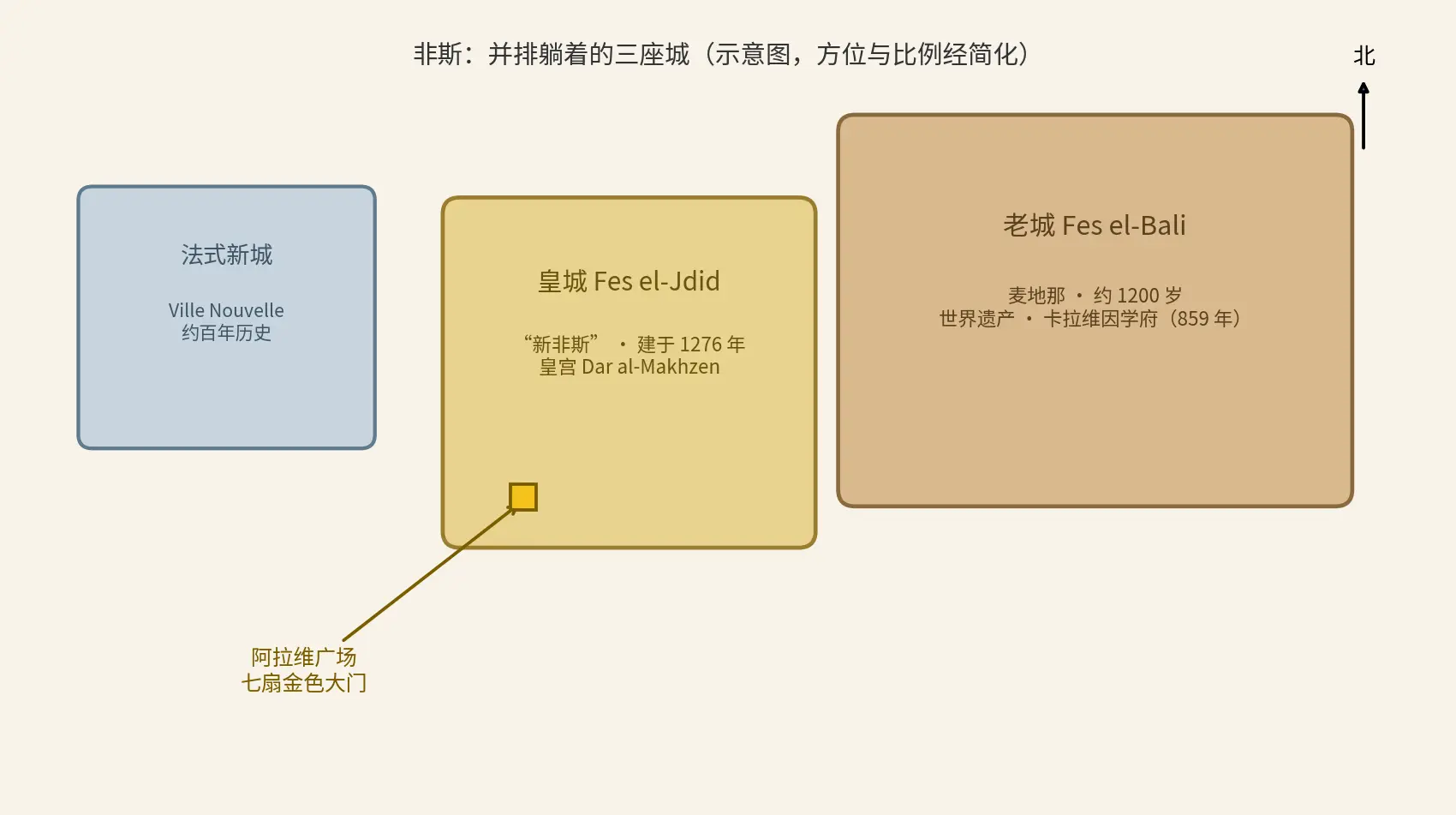
The Royal Palace of Fez remains an active residence of the Moroccan royal family; the king stays here whenever he visits the city. Its walls enclose some 80 hectares of land—equivalent to over a hundred football pitches—containing mosques, gardens, a library, and even a royal college. But none of that concerns tourists: the palace is closed to the public, and the closest anyone can get is standing before this row of gates on Place des Alaouites. Royal guards keep watch day and night; you may photograph the doors, but not the guards, and certainly not whatever lies beyond the crack between them.
So this row of gates has become the "face" of the entire palace. Unable to glimpse the courtyards within, people pour all their attention onto the doors themselves—and the doors can handle it. Along one side of the square stand seven arched gates of varying sizes, every panel clad in gilded brass hammered into intricate star-and-polygon patterns, each door fitted with basin-sized brass knockers. The ring of blue mosaic surrounding the brass is zellige, Morocco's signature craft: artisans first fire whole tiles of coloured glaze, then chip them piece by piece into geometric fragments with small hammers, and finally fit them together on the wall as tightly as a jigsaw puzzle. Not a single human figure or animal appears in the patterns—Islamic decorative art channels all its imagination into geometry and floral motifs, so elaborate that if you lean in close, every square centimetre feels as though someone lavished care upon it.
A 750-year-old palace with a face only decades old
According to Wikipedia, this palace's history traces back to 1276: the Marinid sultan built a new royal city, Fes el-Jdid ("New Fez"), beside the old medina, and the palace is the same age as that city. Counting from 1276, it turns 750 this year. Most of the structures inside today, however, were added by successive Alaouite dynasty monarchs from the 17th century onward.
But here's the real twist: the famous golden gates in today's wallpaper are actually very young. According to Lonely Planet and other sources, in the late 1960s King Hassan II moved the palace's main entrance from the north side to the south, creating Place des Alaouites, and this row of gates was crafted by local artisans at that time—making them only fifty or sixty years old. A 750-year-old palace wearing a face just decades old, yet that face is widely regarded as the pinnacle of traditional Moroccan craftsmanship. What this really demonstrates is that from the Marinid dynasty to the present day, the craft tradition in Fez has never been broken. Workshops in the old city still teach zellige, brasswork, and wood carving; masters train apprentices, generation after generation, applying 13th-century skills to a 20th-century door.
This is hardly surprising. Fez has always been a "city of crafts": the eastern old city, Fes el-Bali, is a UNESCO World Heritage Site and one of the world's largest car-free urban areas, its thousands of narrow alleys packed with tanneries, brass workshops, and dye houses. The city's al-Qarawiyyin mosque and university, founded by Fatima al-Fihri in 859 CE, is often cited as the world's oldest continuously operating institution of higher learning—predating Oxford by over three hundred years. A city that has been teaching and hammering brass for over a millennium making a fine door for its own palace is simply par for the course.
The lemon trees standing guard
Now for the most charming secret of these gates. If you stand in Place des Alaouites, you'll notice a few lemon trees planted in front of the doors. They aren't decorative.
According to Lonely Planet, local guides have a signature routine: they pluck a lemon from the tree, split it open, and rub it on the brass door in front of tourists—and the dull surface instantly flashes gold. Brass is an alloy of copper and zinc; exposed to air over time, it develops a dark layer of oxide, what we'd call tarnish. The citric acid in lemon juice is a mild acid that dissolves this "coat of rust," letting the metal beneath shine through again. There's no magic at the palace; what keeps the gates gleaming year-round, besides the craftsmen's hammers, is this little bit of acid applied by passers-by every day.
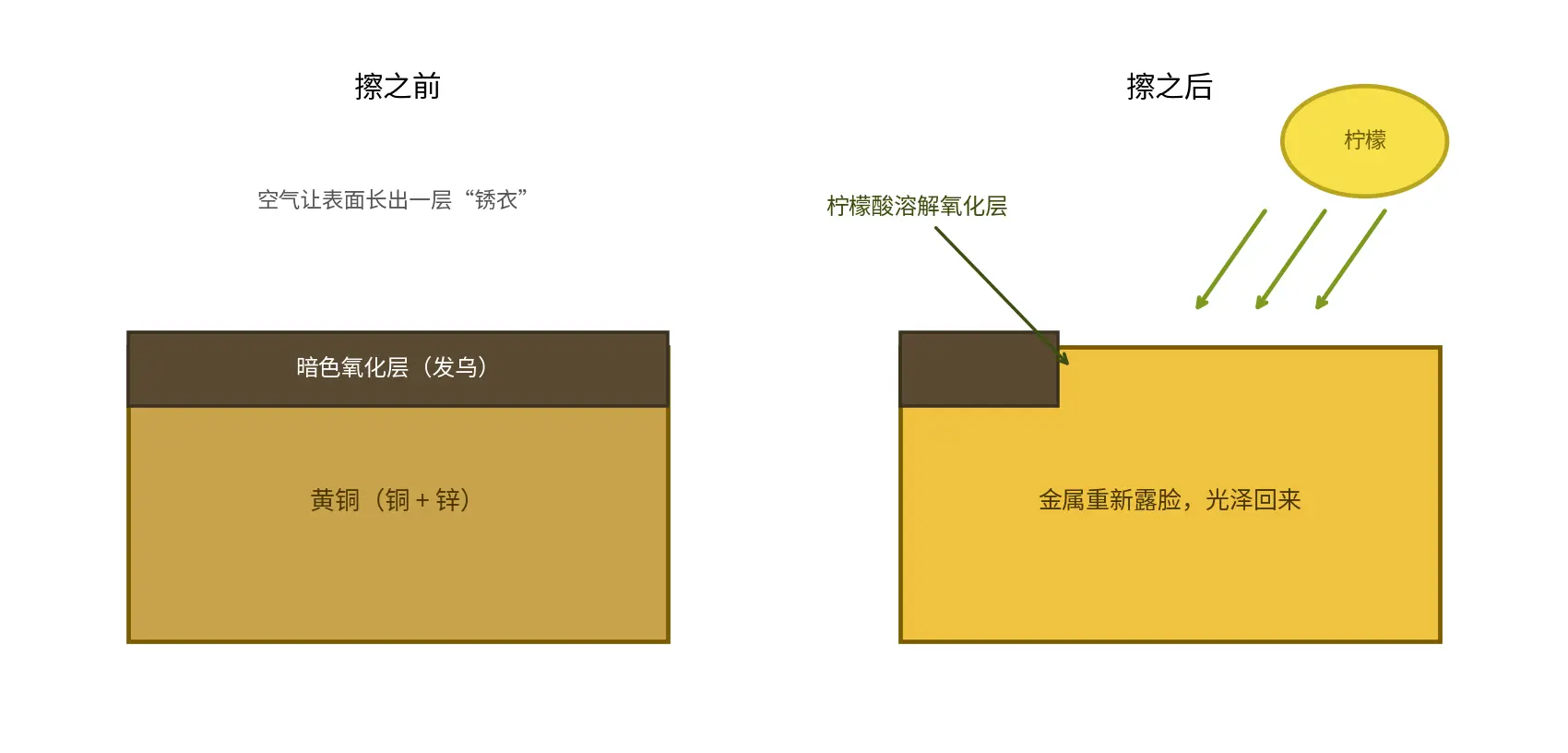
You can verify this tonight: find a tarnished copper coin or brass key, squeeze on some lemon juice (a pinch of salt helps), rub with a cloth for a minute, then rinse with water and dry. Watching the dull metal brighten bit by bit, you'll probably understand why the guides of Fez never tire of the trick—it's a chemistry lesson and a magic show in one.
Bing didn't peg this image to any particular anniversary; the reason for choosing it is written right in the Chinese title: "Gateway to a Hidden Realm, Craftsmanship for the Ages." If one day you do find yourself standing before these gates—a word of advice: August noons in Fez are scorching; locals recommend going at dawn or dusk, when the square is free, uncrowded, and the light is at its best; even more comfortable seasons are spring and autumn—don't just snap photos. Lean in close, see how those centimetre-square tiles are fitted into curves, then look up and take a breath. If you're lucky, there'll be a hint of lemon on the breeze.
Sources: Bing Daily Wallpaper metadata (zh-CN archive), Wikipedia: Royal Palace of Fez, Lonely Planet: Royal Palace, Fez, Deep in Morocco, Third Eye Traveller field visit