
This handsome colonnade once served some of the kingdom's least glamorous work.
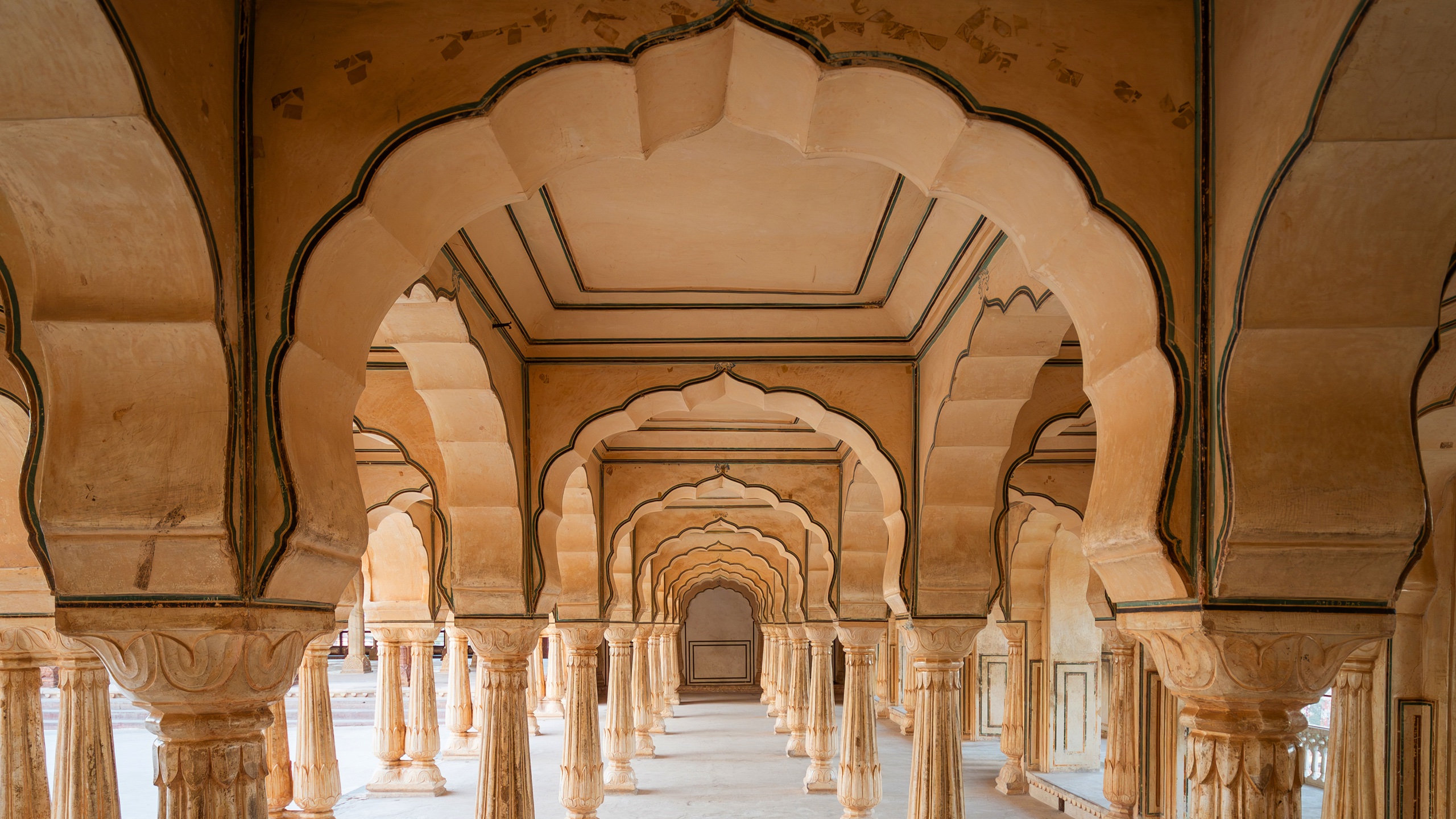
Image: Bing Daily Wallpaper | Sattais Katcheri, Amber Fort, India | Photograph: R.M. Nunes/Getty Images | Original page
Inside Amber Fort near Jaipur, a succession of arches draws the eye through a hall supported by rows of pillars. The space is called Sattais Katcheri. Sattais means twenty-seven, a reference to its colonnade.
This was neither the palace's famous mirror room nor a pavilion built simply for the view. Bing's description associates it with administrative work, and accounts of the fort describe scribes sitting here. Even a splendid royal complex needed a place for records and routine business.
A Palace Built Over Generations
Construction at Amber Fort began under Raja Man Singh I in 1592, and later rulers continued to add to it. Rajasthan Tourism describes four main sections, each with its own courtyard. Moving through them meant moving from more public spaces toward the royal quarters.
The court moved to the newly planned city of Jaipur in 1727. In 2013, Amber Fort became one of the six Hill Forts of Rajasthan inscribed on UNESCO's World Heritage List. UNESCO identifies Amber Palace as an important example of the meeting of Rajput and Mughal court styles.
Water in Another Room
Elsewhere in the complex is Sukh Niwas, a room associated with a channel of flowing water that continued into a courtyard garden. Historical accounts describe the channel; evaporation in a dry climate can draw heat from the surrounding air.
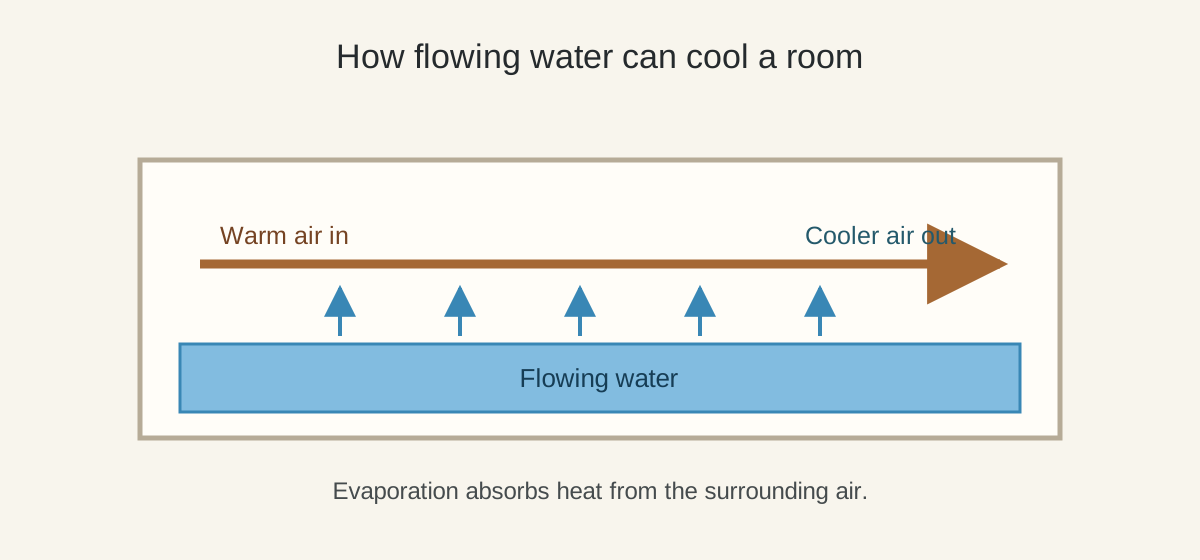
Sukh Niwas and the Sattais Katcheri in the photograph are separate spaces. The open appearance of this colonnade alone does not show that it was cooled by the same water channel.
The wallpaper's most revealing detail may be its ordinary purpose. Those twenty-seven pillars preserve a glimpse of the work that kept a royal capital running.
Sources
Bing Daily Wallpaper: Original page; Rajasthan Tourism: Amber Palace; UNESCO: Hill Forts of Rajasthan; Rima Hooja: The garhs of Jaipur.