
Waves break against the rocks, and a small pale wall appears beneath the cliff. Above it hangs a roof of stone. Bing's November 22 image takes us to Santa Justa in Cantabria, northern Spain, where a chapel seems to have borrowed a room from the coast itself.
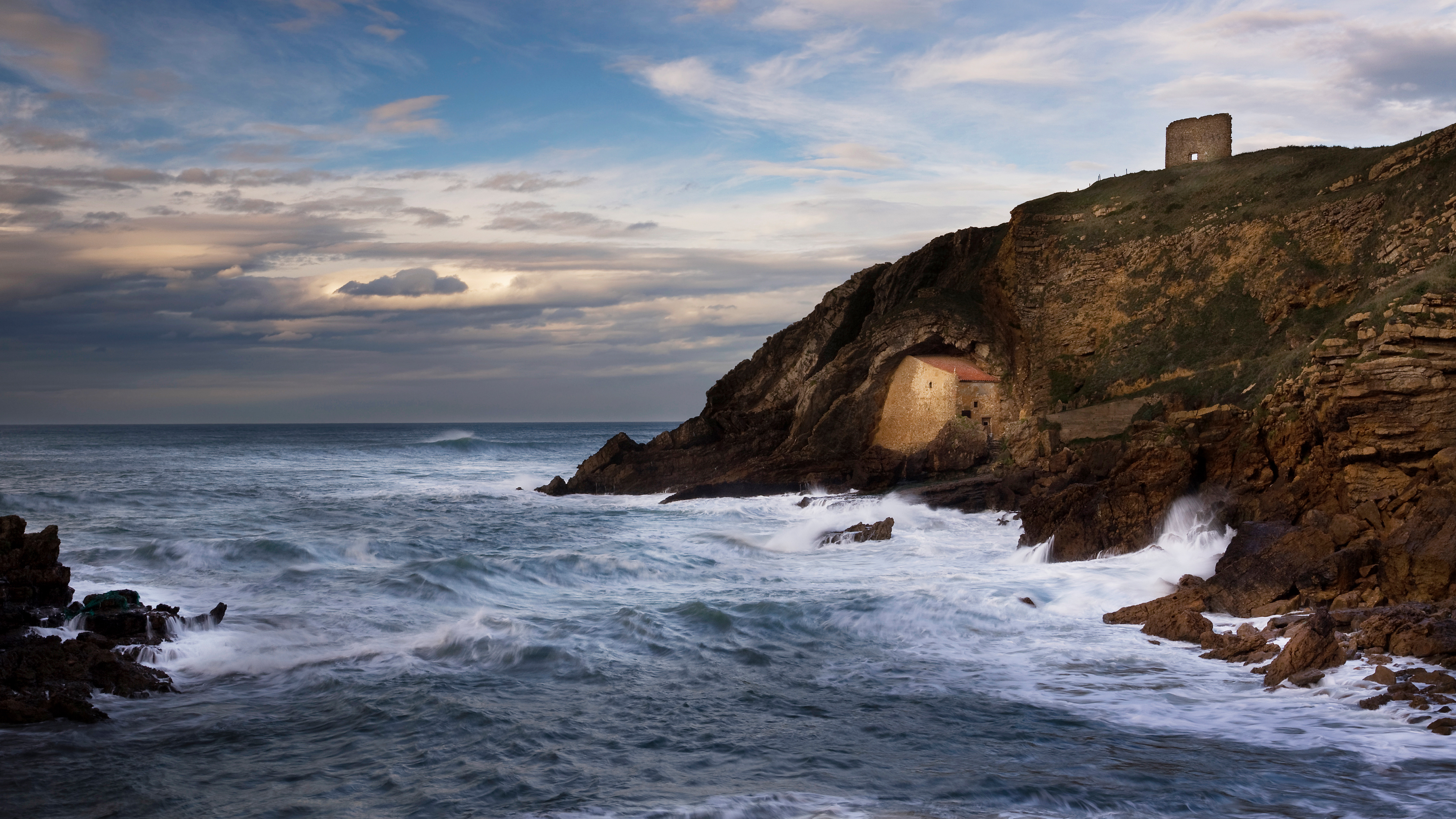
Image: Santa Justa Hermitage and chapel, Cantabria, Spain (© Tramont_ana/Getty Images). Original page
Look at the layers surrounding the building. They bend instead of lying in a neat, level stack. The story starts with that curve.
The local tourism office identifies the formation as an anticline, a rock fold whose core contains the old hermitage. Think of a stack of sheets slowly being pushed into an arch. Rock layers can also buckle under geological forces, although the process takes far longer than bending paper.
Cantabria's official tourism publication explains that erosion hollowed out part of the fold, leaving the recess occupied by the chapel. The present building probably dates to the 16th century. Its walls and roof fit the space provided by the rock: first the fold, then the hollow, then a human shelter.
The sea is an active presence in the photograph. Waves burst just below the building, making the relationship between the little wall and its enormous natural overhang easy to see. Above them, the remains of the San Telmo fortification stand on the slope.
Santa Justa beach is near Ubiarco. Before a visit, check the local tourism page for road and access information, and observe the fold from a safe position away from wave-washed rocks. Even on screen, you can follow a single layer from the right side of the photograph toward the chapel and watch it become part of the natural roof.